Development of a non-triazine H2S scavenger for oil and gas gathering, treatment, and transportation systems
Abstract
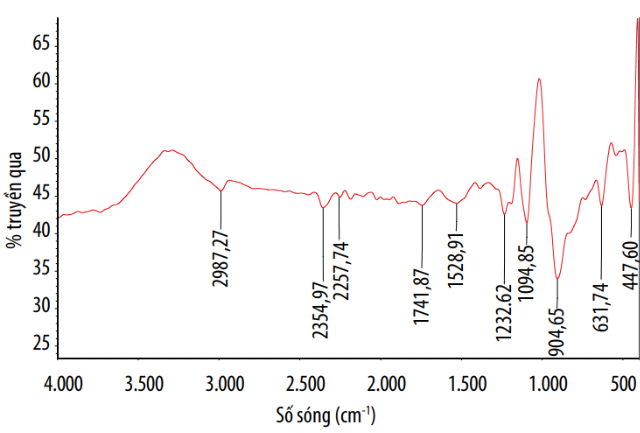
This study presents the synthesis and performance evaluation of a non-triazine hydrogen sulfide (H2S) scavenger, designated as HS-525, prepared from paraformaldehyde and ethylene glycol. FT-IR analysis confirmed the formation of characteristic hemiacetal linkages, indicating successful synthesis and the absence of nitrogen-containing structures. Experimental investigations assessing the effects of H2S concentration, temperature, and scavenger-to-gas ratio indicate that HS-525 reacts rapidly with H2S, maintains stable scavenging capacity across a wide range of tested conditions, and exhibits high absorption performance even at elevated H2S concentrations. Increasing temperature enhances both reaction rate and removal efficiency, while higher scavenger dosage provides superior performance. Under neutral pH conditions, HS-525 does not cause corrosion or calcium carbonate precipitation and is more environmentally benign than conventional triazine-based scavengers. The study results demonstrate the potential of developing non-triazine H2S scavengers for oil and gas collection, treatment, and transportation systems.
References
Võ Thị Thương, Trần Vĩnh Lộc, Lê Dương Hải, Trần Nam Thanh, Nguyễn Anh Tuấn, Lê Mai Phương, Huỳnh Minh Thuận, “Đánh giá và đề xuất phương án công nghệ loại bỏ H2S trong khí từ mỏ Cá Voi Xanh”, Tạp chí Dầu khí, số 2, trang 47 - 53 , 2017.
PVN, “Thông báo về việc khảo sát sự quan tâm để hợp tác, triển khai hoạt động dầu khí tại Lô 01/97&02/97”.
Obakore W. Agbroko, Karishma Piler, and Tracy J. Benson, "A comprehensive review of H2S scavenger technologies from oil and gas streams", ChemBioEng Reviews, Volume 4, Issue 6, pp. 339 - 359, 2017. DOI: 10.1002/cben.201600026.
Ismail A. Elhaty, "Development in the scavenging efficiency of H2S scavengers in oil and gas industry", Natural Volatiles & Essential Oils Journal, Volume 9, Issue 2, pp. 219 - 229, 2022.
F. Chaudhry, G.L. Mobley, Y.H. Tsang, S. Ramachandran, V. Jovancicevic, S.C. Braman, E.N. Rowton, A.P. McDonald, and J.A Davis, "Laboratory development of a novel, non-triazine-based hydrogen sulfide scavenger and field implementation in the haynesville shale", SPE International Conference on Oilfield Chemistry, The Woodlands, Texas, USA, 8 - 10 April 2013. DOI: 10.2118/164077-MS.
J.J. Wylde, G.N. Taylor, K.S. Sorbie, and W.N. Samaniego, “Synthesis and reaction byproduct characterization and mechanistic understanding of hemiformal based hydrogen sulfide scavengers”, Energy and Fuels, Volume 34, Issue 4, pp. 4808 - 4821, 2020. DOI: 10.1021/acs.energyfuels.0c00110.
Aaron D. Martinez, Erick J. Acosta Otero, Maximilian A. Silvestri, Joseph P. Bailey, and Jose M. Macias, "Functionalized hydrogen sulfide scavengers", United StatesPatent US20140166282A1, 19/6/2014. [8] Aaron D. Martinez, Ravindranath Mukkamala, Erick J. Acosta Otero, Joseph P. Bailey, "Scavenging hydrogen sulfide", United States Patent US20140166289A1, 19/6/2014.
Conchita Mendez, Alvaro A. Oliveira Magalhaes, Pedro Altoe, and Eduardo Acosta, "H2S scavengers injection: A novel evaluation protocol to enhance the integrity of production lines", Offshore Technology Conference, Houstan, Texas, 4 - 7 May 2009. DOI: 10.4043/20168-MS.
Giuseppe Messina, Giovanna Chessa, Loreno Lorenzoni, and Riccardo Mansani, "Process for the synthesis of alpha-hydroxy-esters", European Patent EP0463676A1, 2/1/1992.
Jerry J. Weers, Soma Chakraborty and Vaithilingam Panchalingam, "Functionalized aldehydes as H2S and mecartan scavengers", United States Patent US10829699B2, 10/11/2020.
Jeffery Caleb Clark, Matthew Trevino and Lawrence J. Karas, Julian M. Gallardo, Prakasa Anantaneni, Rafaela Carvalhal Passos, Christopher Burrell, and Geeta Rana, "Hydrogen sulfide scavengers", United States Patent US10538710B2, 21/1/2020.
1. The Author assigns all copyright in and to the article (the Work) to the Petrovietnam Journal, including the right to publish, republish, transmit, sell and distribute the Work in whole or in part in electronic and print editions of the Journal, in all media of expression now known or later developed.
2. By this assignment of copyright to the Petrovietnam Journal, reproduction, posting, transmission, distribution or other use of the Work in whole or in part in any medium by the Author requires a full citation to the Journal, suitable in form and content as follows: title of article, authors’ names, journal title, volume, issue, year, copyright owner as specified in the Journal, DOI number. Links to the final article published on the website of the Journal are encouraged.