Simulation study of amine conversion processes to improve the processing efficiency of high-sulphur crude oil at Dung Quat Refinery
Abstract
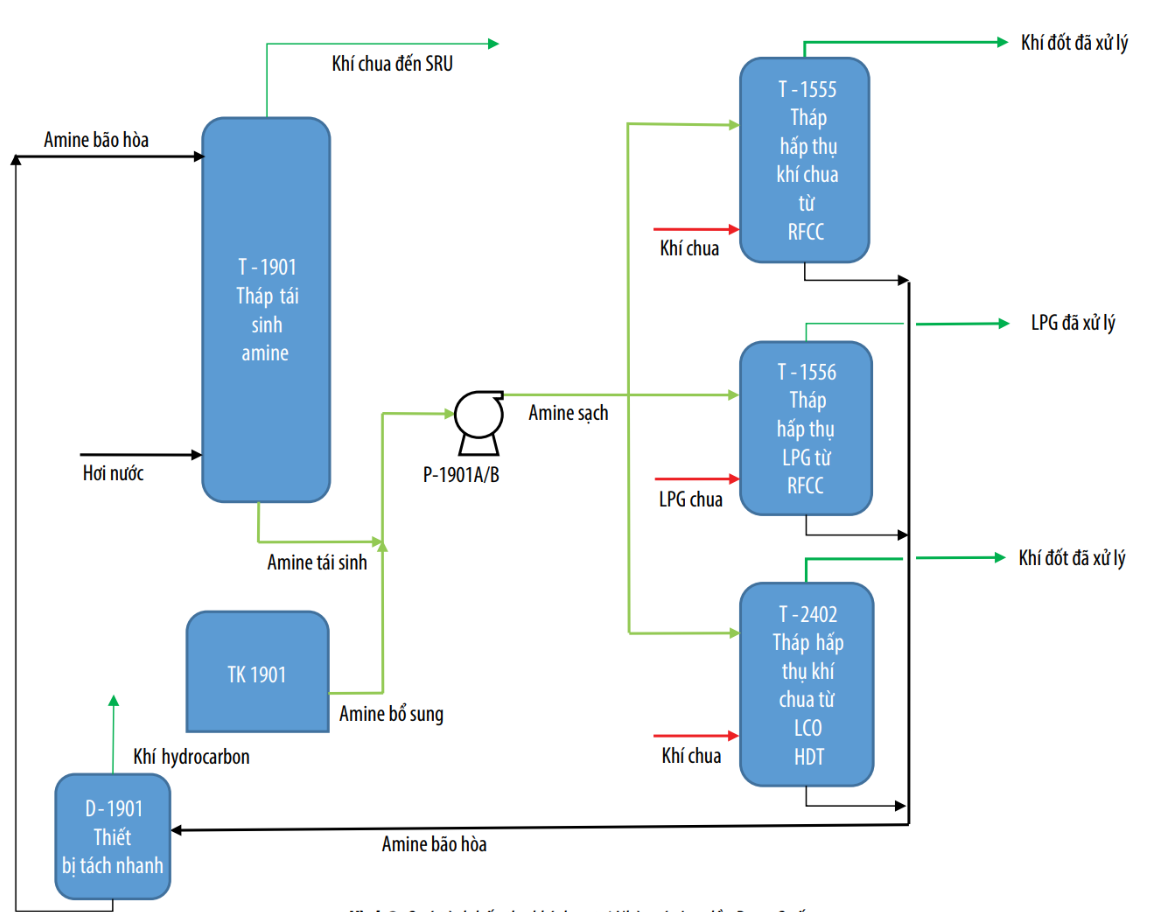
By design, diethanolamine (DEA) is used in the Amine Regeneration Unit (ARU) of the Dung Quat Refinery to absorb sour gas generated during the processing of sweet and light crude oils. However, in recent years, the Refinery's feedstocks have been supplemented with imported crude oils, most of which have high sulfur content, resulting in an increase in the volume of sour gas that needs to be treated. This shift necessitates the adoption of more advanced amine solvents to enhance the sour gas absorption efficiency in fuel gas and LPG streams, while also optimizing the performance of the following Sulfur Recovery Unit (SRU).
This article presents the results of a study simulating the conversion of the amine solvent from diethanolamine (DEA) to N-methyldiethanolamine (MDEA) at the ARU using the specialized software PROMAX to evaluate the impact of this amine replacement on the existing technology system.
References
Saeid Mokhatab and William A. Poe, Handbook of natural gas transmission and processing, 2nd edition. Gulf Professional Publishing, 2012.
Arthur L. Kohl and Richard B. Nielsen, “Chapter 2 - Alkanolamines for hydrogen sulfide and carbon dioxide removal”, Gas purification (fifth edition). Gulf Professional Publishing, 1997.
BSR, “Sổ tay vận hành phân xưởng ARU 8474L-019- ML-001”.
BSR, “Sổ tay vận hành phân xưởng RFCC 8474L-015- ML-001”.
BSR, “Sổ tay vận hành phân xưởng LCO HDT 8474L-024-ML-001”.
Haldor Topsoe, “Study report on amine conversion from DEA to MDEA”.
1. The Author assigns all copyright in and to the article (the Work) to the Petrovietnam Journal, including the right to publish, republish, transmit, sell and distribute the Work in whole or in part in electronic and print editions of the Journal, in all media of expression now known or later developed.
2. By this assignment of copyright to the Petrovietnam Journal, reproduction, posting, transmission, distribution or other use of the Work in whole or in part in any medium by the Author requires a full citation to the Journal, suitable in form and content as follows: title of article, authors’ names, journal title, volume, issue, year, copyright owner as specified in the Journal, DOI number. Links to the final article published on the website of the Journal are encouraged.